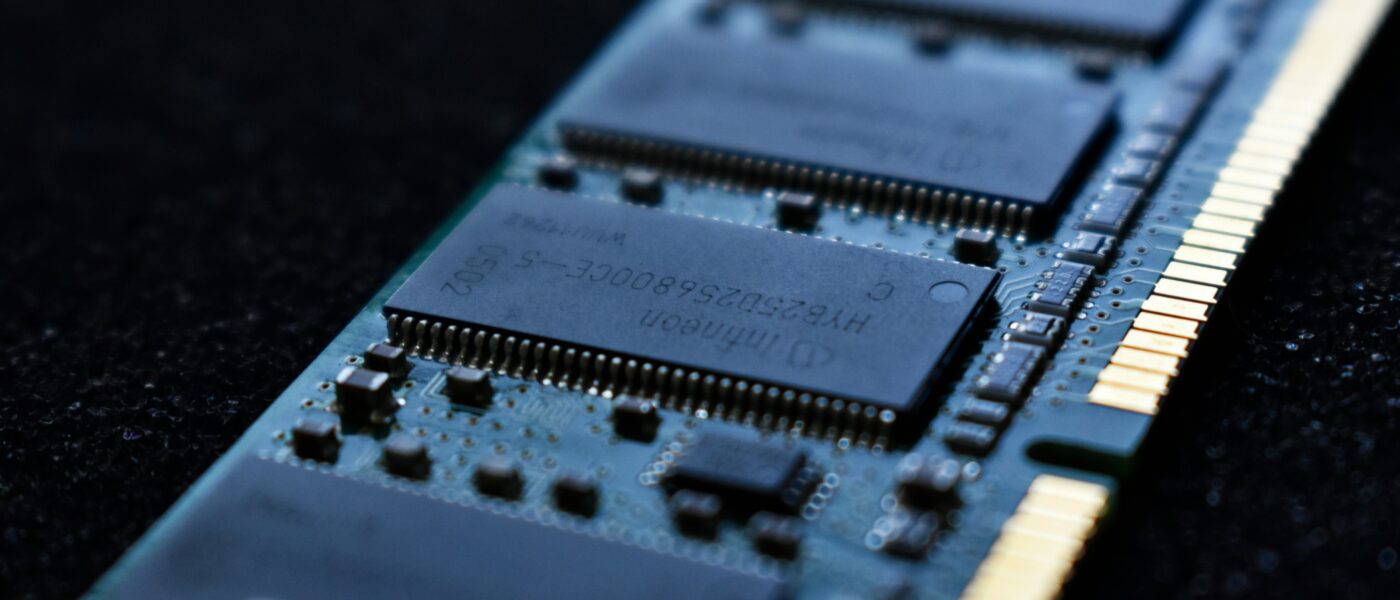
While war and geopolitics occupy the front pages, a quiet crisis has emerged in tech – that could affect all of us heavily in the coming months and year. RAM – the hardware component in computers that provides short-term memory, powering everything we do as users – is becoming a scarce commodity. As a result, hardware prices are soaring. Worse still, this doesn’t seem to be a temporary situation: journalists and commentators believe it’s set to continue at least into 2027, if not beyond.
If you’re due any hardware replacements, server upgrades or renewals in the next two years, we’d strongly recommend having a plan based on the unfolding situation. Here’s what’s happening in more detail, why it matters, and a plan of action for most SMEs.
What’s actually happening?
Over the past 12 months, the world has entered what some analysts have labelled ‘RAMageddon’. RAM prices have surged anywhere from 90% to over 300%, depending on the module type and sector, with volatility so extreme that some suppliers have shifted to hourly price adjustments.
The root cause? AI data centres are consuming global memory supply at unprecedented rates.
That’s having a number of knock-on effects. Major memory manufacturers – like Samsung, SK Hynix and Micron – have shifted production toward high‑bandwidth memory (HBM) used in AI workloads, starving the market of standard DRAM used in laptops, PCs, servers, IoT devices and network hardware.
A typical AI server can require as much advanced memory as dozens or even hundreds of consumer laptops, causing hyperscalers to absorb the majority of global production. It’s hard to predict the impact on hardware costs but IT industry publications TrendForce and DigiTimes tracked RAM price increases of 90–95% from Q4 2025 to Q1 2026, with another 70% surge expected in Q2.
Meanwhile, the big players – cloud providers, smartphone giants, top‑tier OEMs – are buying memory in advance and at scale, leaving everyone else to compete for what remains. Some suppliers now require up‑front payment just to secure allocation.
Why it matters to UK small businesses
This isn’t a consumer‑only issue. It affects every organisation that relies on computing – which today is virtually everyone. Here’s what we’re seeing already:
- Higher hardware prices across the board – Analysts Gartner estimate DRAM and SSD costs will rise 130% by the end of 2026, pushing up PC prices by at least 17% and smartphone prices by 13%. Entry-level devices are being hit the hardest: Gartner even thinks the sub-£500 PC market will disappear by 2028 because of the inflation in memory costs. This all means significantly higher costs for: laptops and desktops, servers, firewalls, switches, routers, storage infrastructure generally, mobile phones, and any specialist tech you may rely on to do business.
- Supply and project delays – Hardware will go to the biggest, highest bidders. Shortages are already causing delivery delays and reduced product availability. Some manufacturers have paused or even cancelled planned launches because they can’t source memory at viable prices. For small businesses, this could mean lengthy IT project and hardware replacement delays and pushed-back cloud migration timelines.
- Security and compliance risks – Outdated or incompatible hardware is a huge cybersecurity issue. Gartner warns that delayed upgrades will mean device lifespans will increase by 20% – but that potentially means unsupported operating systems, unpatched vulnerabilities, and compatibility issues with new applications and security tools. Last year, Microsoft announced it would no longer be supporting Windows 10, forcing users to upgrade to Windows 11 rapidly – but in many cases, that means upgrading RAM requirements to support it. Now the global shortage of RAM is only compounding that issue – and cybercriminals are well aware that this means more devices are easy targets.
Take action now
The situation is not set to improve until late 2027, if not longer. If any of your devices or hardware are due to be replaced in that time, you should act now to secure it at today’s price – rather than tomorrow’s next price hike.
- Bring planned hardware upgrades and investments forward. You will pay more – potentially much more – if you wait.
- Prioritise your most critical hardware first. Focus on what would directly affect business continuity, if you need to be strategic about where you spend first. That might be servers nearing their end of life, network infrastructure, or devices which are already out of date because they’re still on Windows 10, for example.
- Review your IT strategy. Weigh up whether your refresh cycle needs to be brought forward – or restructured – to avoid cascading cost increases. If you aren’t able to make immediate upgrades across the board, ensure all your firmware and operating systems are up to date (see our previous point about Windows 10), optimise performance on any ageing or slowing devices, and review your security and access controls.
- Talk to us. As a managed services provider with business-friendly procurement mechanisms, we may be able to leverage economies of scale and our vendor partnerships to get you a good deal. That includes our Hardware-as-a-Service model, where the cost of hardware spending can be spread out as a managed subscription, helpfully moving it from CapEx to OpEx.
Final thoughts
The global RAM shortage is not a passing supply chain hiccup – it’s the result of a fundamental industry realignment toward AI infrastructure. Prices are rising fast, availability is tightening, and businesses that wait may face budget overruns, heightened cybersecurity risk and delays to strategic projects.
We’d strongly recommend acting sooner rather than later if you have any hardware investments planned in the next two years. The cost of buying early is almost certainly lower than the cost of waiting.
We’re here to help. If you’d like advice on assessing upgrade priorities, modelling the cost impact or securing hardware at today’s pricing, get in touch to speak to our team.